
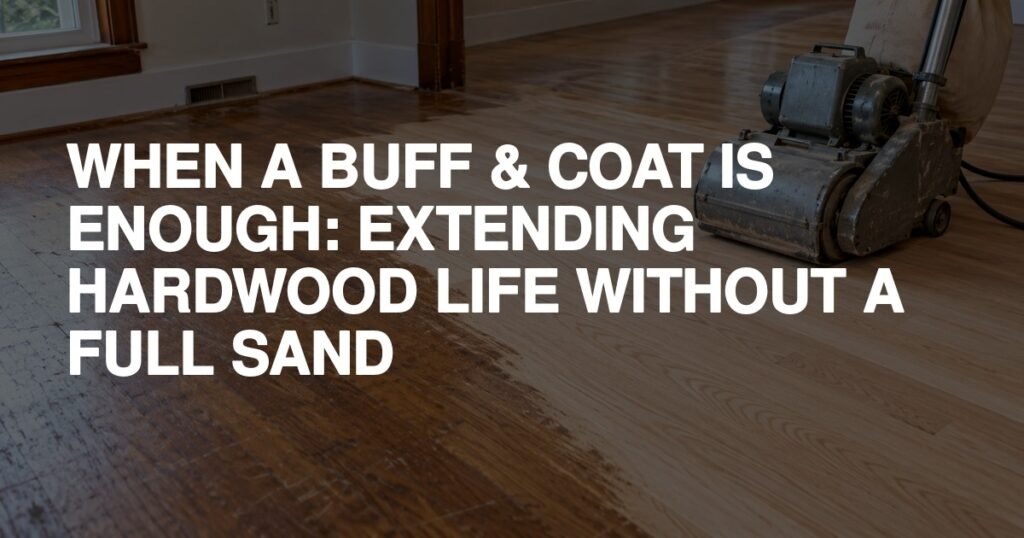
Explain where a maintenance coat fits in the lifecycle of a hardwood floor, what wear it can correct, what it cannot fix and why timing matters.
The short answer
A buff and coat is appropriate when the existing finish is fundamentally sound but has lost luster or developed light surface wear. It is maintenance for the protective film, not a substitute for repairing damaged wood.
What the decision depends on
Hardwood work should begin with the conditions that exist, not with a process name. The useful scope connects visible wear to the floor construction, the substrate below it, the coating already present, and the appearance the homeowner expects at the end.
- finish remains continuous with no broad bare areas
- scratches appear confined to the coating
- boards are stable and do not need structural repair
- existing coating can be identified or tested
- floor is free from wax, polish, oil, and silicone contamination
- the owner accepts the existing stain color and character
Record these items during the estimate. Doing so makes it easier to compare recommendations, identify unknowns, and keep repair work, color decisions, and finish expectations from becoming last-minute surprises.
A practical professional sequence
- Inspect and test a representative area. Confirm the details for this floor, document the decision, and complete the work in the sequence required by the selected materials.
- Deep-clean using a compatible preparation system. Confirm the details for this floor, document the decision, and complete the work in the sequence required by the selected materials.
- Abrade or chemically prepare the finish as specified. Confirm the details for this floor, document the decision, and complete the work in the sequence required by the selected materials.
- Remove residue and verify a clean surface. Confirm the details for this floor, document the decision, and complete the work in the sequence required by the selected materials.
- Apply a compatible maintenance coat and protect it during cure. Confirm the details for this floor, document the decision, and complete the work in the sequence required by the selected materials.
The exact tools, abrasives, adhesives, coatings, spread rates, and timing belong to the approved product system and the site assessment. A dependable plan explains why each stage is needed and what must be true before the next stage begins.
Limits to understand before work starts
- Deep gouges and dents remain visible.
- Gray or darkened bare wood is not restored by adding finish.
- Unknown cleaners and polishes can create adhesion risk.
- A recoat cannot correct an unwanted stain color.
These limits are not reasons to avoid the project. They are reasons to define success accurately. Natural variation and a visible repair can still produce a strong result when they are discussed before work and evaluated in the context of the full floor.
Common planning mistakes
- using shine as the only condition test
- coating over residues
- expecting the service to level the floor
- postponing maintenance until traffic lanes have worn to raw wood
A written scope should resolve these questions before the project starts. It should also identify who moves furniture, how adjacent spaces are protected, how samples are approved, what conditions can create a change order, and which care instructions apply after completion.
Questions homeowners ask
Will a buff and coat remove scratches?
It may soften the appearance of light finish-level marks, but it does not remove damage in the wood.
Can any floor be recoated?
No. The existing coating and contamination history must be compatible with the preparation and new finish.
Why does timing matter?
Maintaining an intact finish can preserve the wood below and avoid a more invasive restoration later.
Plan the next step around your floor
Rapid Revival Hardwood serves homeowners around Waynesville, Saint Robert, Rolla, Lebanon, and nearby Missouri communities. An on-site assessment can separate finish wear from wood damage, confirm the construction and substrate, and turn the options in this guide into a project-specific recommendation.
Get a clear hardwood recommendation
Bring photos, known leak or repair history, the rooms involved, and any color references to the estimate conversation.