
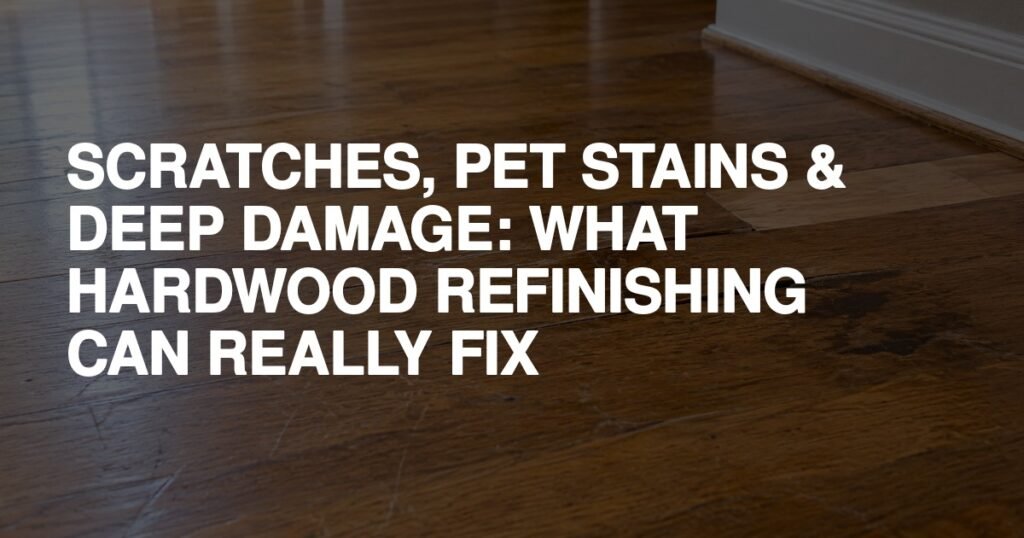
Separate finish-level wear from damage that penetrates the wood. Explain sanding limits, localized repairs, board replacement and when a stain may remain visible.
The short answer
The repair depends on how far the damage penetrates. Finish-level scratches may be maintained or recoated; damage in the wood may require sanding; deep contamination, split boards, or severe staining may require localized replacement.
What the decision depends on
Hardwood work should begin with the conditions that exist, not with a process name. The useful scope connects visible wear to the floor construction, the substrate below it, the coating already present, and the appearance the homeowner expects at the end.
- scratch depth and whether fibers are crushed
- bare wood versus intact finish
- odor or contamination associated with pet staining
- darkness that remains below the surface
- board thickness and repair access
- ability to blend replacement wood with the surrounding floor
Record these items during the estimate. Doing so makes it easier to compare recommendations, identify unknowns, and keep repair work, color decisions, and finish expectations from becoming last-minute surprises.
A practical professional sequence
- Classify finish damage versus wood damage. Confirm the details for this floor, document the decision, and complete the work in the sequence required by the selected materials.
- Identify moisture or contamination sources. Confirm the details for this floor, document the decision, and complete the work in the sequence required by the selected materials.
- Test how the mark responds in a controlled area. Confirm the details for this floor, document the decision, and complete the work in the sequence required by the selected materials.
- Repair or replace boards that cannot be restored. Confirm the details for this floor, document the decision, and complete the work in the sequence required by the selected materials.
- Sand and finish the larger field for a coherent result when needed. Confirm the details for this floor, document the decision, and complete the work in the sequence required by the selected materials.
The exact tools, abrasives, adhesives, coatings, spread rates, and timing belong to the approved product system and the site assessment. A dependable plan explains why each stage is needed and what must be true before the next stage begins.
Limits to understand before work starts
- Sanding removes a limited amount of material, not unlimited depth.
- Pet urine can change wood color below the visible surface.
- Spot repairs can remain visible because old and new wood age differently.
- A coating cannot stabilize broken or loose material.
These limits are not reasons to avoid the project. They are reasons to define success accurately. Natural variation and a visible repair can still produce a strong result when they are discussed before work and evaluated in the context of the full floor.
Common planning mistakes
- using aggressive household chemicals before assessment
- assuming every dark mark is removable
- filling movement gaps without understanding why they formed
- promising an invisible patch before sanding and sampling
A written scope should resolve these questions before the project starts. It should also identify who moves furniture, how adjacent spaces are protected, how samples are approved, what conditions can create a change order, and which care instructions apply after completion.
Questions homeowners ask
Can deep scratches be sanded out?
Some can be reduced or removed, but depth, floor thickness, and surrounding flatness set the limit.
Will pet stains disappear?
Results vary; affected boards sometimes need replacement when discoloration or odor penetrates deeply.
Can one board be replaced?
Often yes, but access, fastening method, species, milling, and color blending all matter.
Plan the next step around your floor
Rapid Revival Hardwood serves homeowners around Waynesville, Saint Robert, Rolla, Lebanon, and nearby Missouri communities. An on-site assessment can separate finish wear from wood damage, confirm the construction and substrate, and turn the options in this guide into a project-specific recommendation.
Get a clear hardwood recommendation
Bring photos, known leak or repair history, the rooms involved, and any color references to the estimate conversation.